
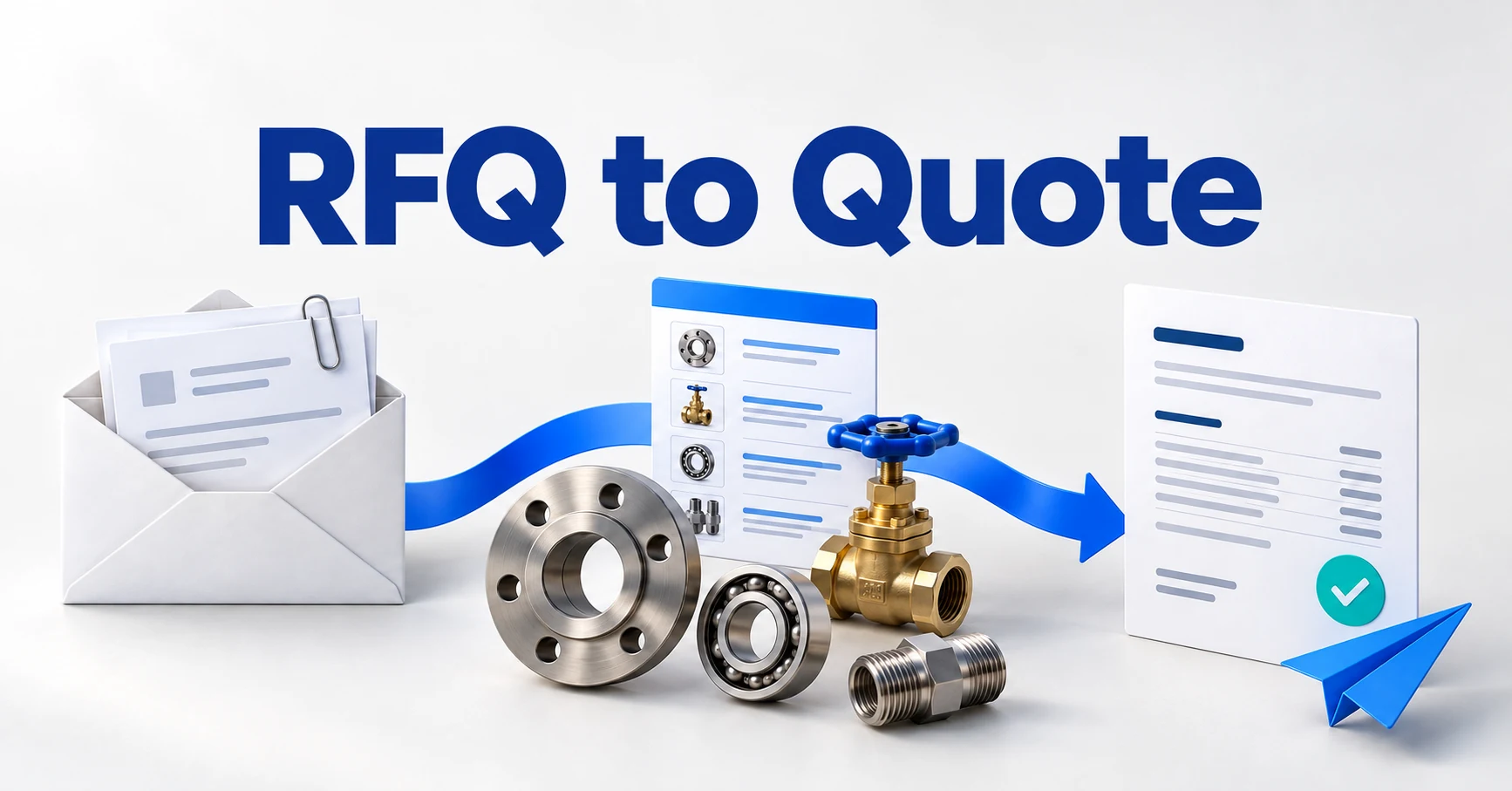
An RFQ arrives by email. Ten items, an attachment and a request: “Please send your best price.”
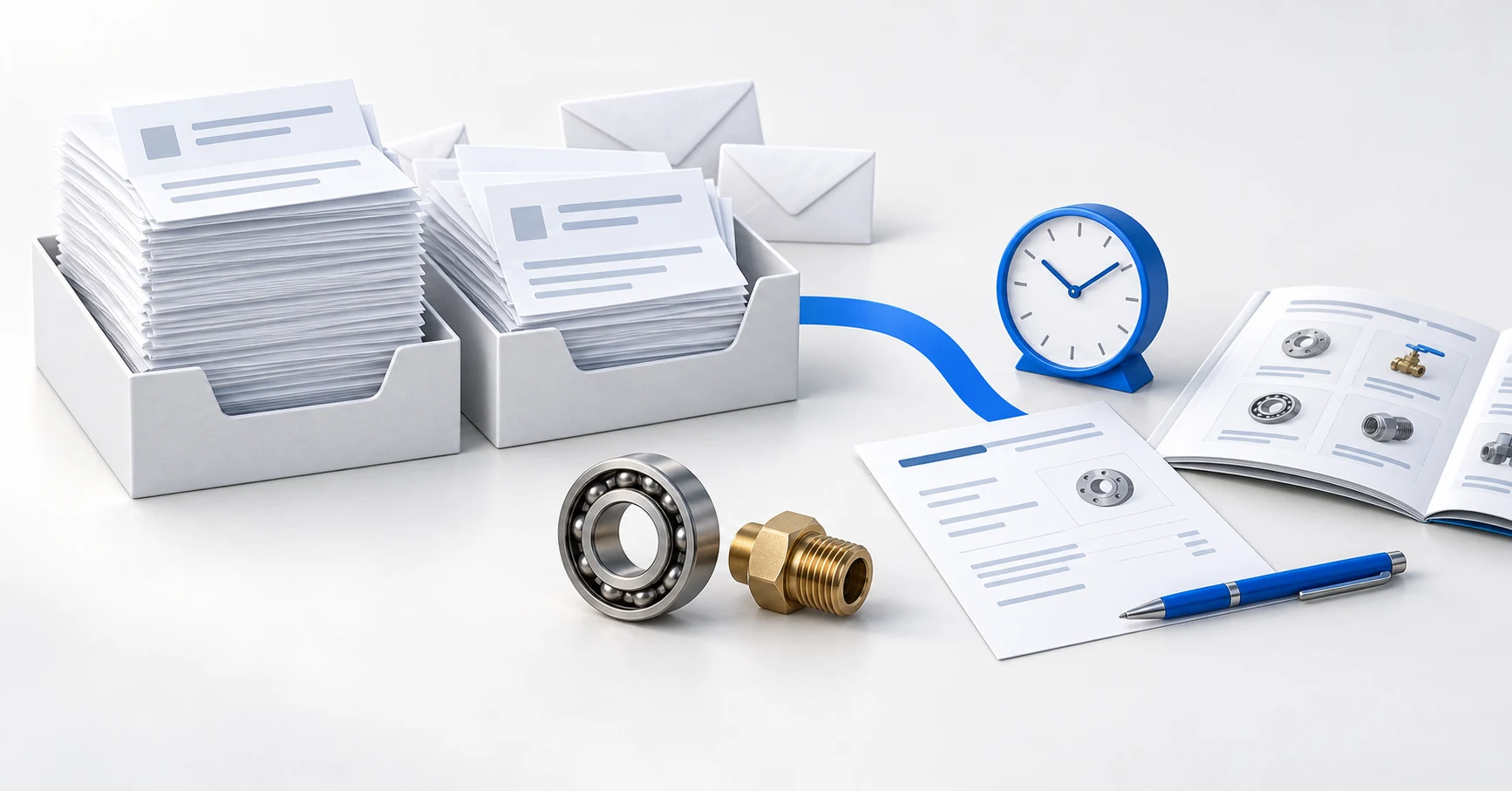
Your sales team searches the catalogue, checks specifications, confirms prices and prepares the quote. Before they finish, more enquiries arrive.
In our discussions with industrial businesses, we’ve heard the same concern: quotation work takes up much of the day, leaving little time for follow-ups and new sales.
Why quotations pile up
For a business receiving 100 RFQs a day, here’s how the workload adds up at an average of 30 minutes per quote:
| Calculation | Result |
|---|---|
| 100 quotes × 30 minutes | 50 hours of work daily |
| One salesperson spending 6 hours on quotes | 12 quotes daily |
| Four salespeople preparing quotes | 48 quotes daily |
| Enquiries left pending | 52 every day |
| Pending enquiries after five working days | 260 |
Handling all 100 enquiries would take around nine people, each spending six hours a day preparing quotations.
And while the team works through the queue, customers are waiting.
How STIMA helps
STIMA brings the quotation process into one connected workflow:
- Reads the enquiry and identifies items and quantities.
- Finds matching products in your catalogue, using AI where needed.
- Applies your prices, customer terms and approval rules.
- Prepares and sends quotes that meet your checks.
- Sends unclear requests and approval cases to your team.
Routine enquiries move automatically. Your team steps in where a decision is needed.
What a 90% automation rate would mean
If 90 of those 100 daily enquiries qualify for automatic processing:
| Daily workload | Manual process | With automation |
|---|---|---|
| Enquiries received | 100 | 100 |
| Quotes needing manual work | 100 | 10 |
| Staff time at 30 minutes per quote | 50 hours | 5 hours |
| Time available for other work | — | 45 hours freed |
The actual saving depends on how many enquiries can be automated and how long exceptions take to resolve.
More time for customers

Your salespeople can spend those hours following up on quotes, helping customers choose products and bringing in new business.
That’s the purpose of STIMA: keep quotations moving, reduce the backlog and give your team more time to sell.