Experienced employees are often the backbone of a business.
They know the customers, the products, the exceptions, the history and the shortcuts that make daily operations work smoothly.
But there is a difference between having experienced people and depending on them too much.
The risk starts when important business knowledge exists only in someone’s head.
Where this dependency usually hides
In many companies, senior employees carry knowledge that is never formally recorded.
This may include:
- which product a customer actually means when they use an old or informal name
- which alternative SKU can be offered when something is unavailable
- which customers expect special pricing or packaging
- which suppliers can handle urgent requirements
- which products are usually sold together
- which exceptions were agreed with a customer years ago
- which enquiries need extra attention before a quotation is sent
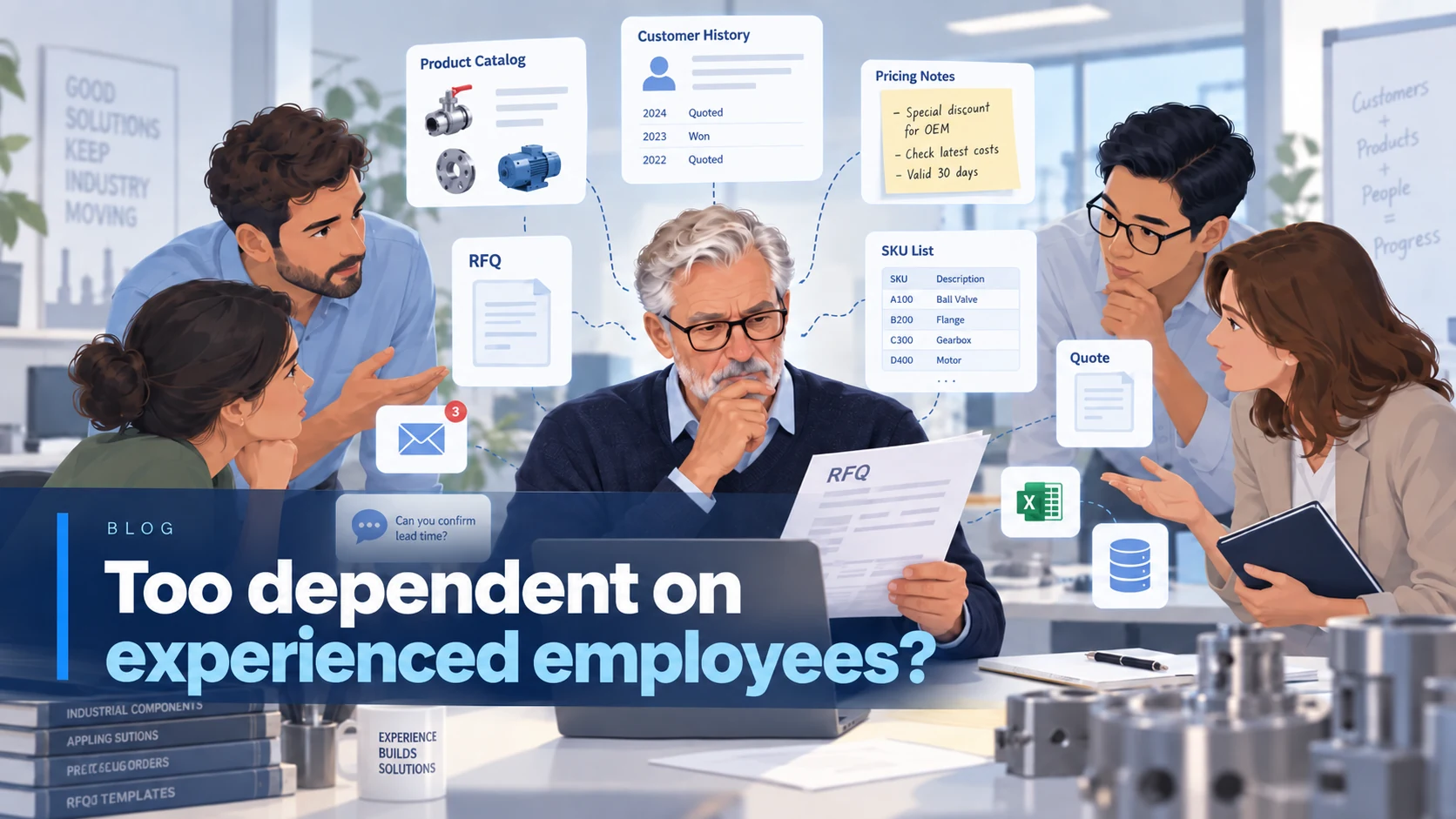
Your ERP may contain the product.
Your CRM may contain the customer.
Your email may contain the conversation.
But the actual understanding of what should be done may still sit with one person.

Signs your business is too dependent on individuals
Dependency usually becomes visible through repeated patterns.
Watch for situations like:
- junior employees repeatedly asking the same senior person for help
- difficult RFQs being forwarded to one specific employee
- quotations slowing down when that person is on leave
- customer preferences being remembered rather than recorded
- old emails being searched to understand what was supplied previously
- important decisions living inside personal WhatsApp chats
- employees saying, “Only he knows this customer properly.”
These are not just operational inconveniences.
They are signs that valuable company knowledge has not yet become shared organisational knowledge.
What this dependency can cost you
The biggest risk appears when the employee is suddenly unavailable, retires or leaves the company.
The impact can be much larger than expected.
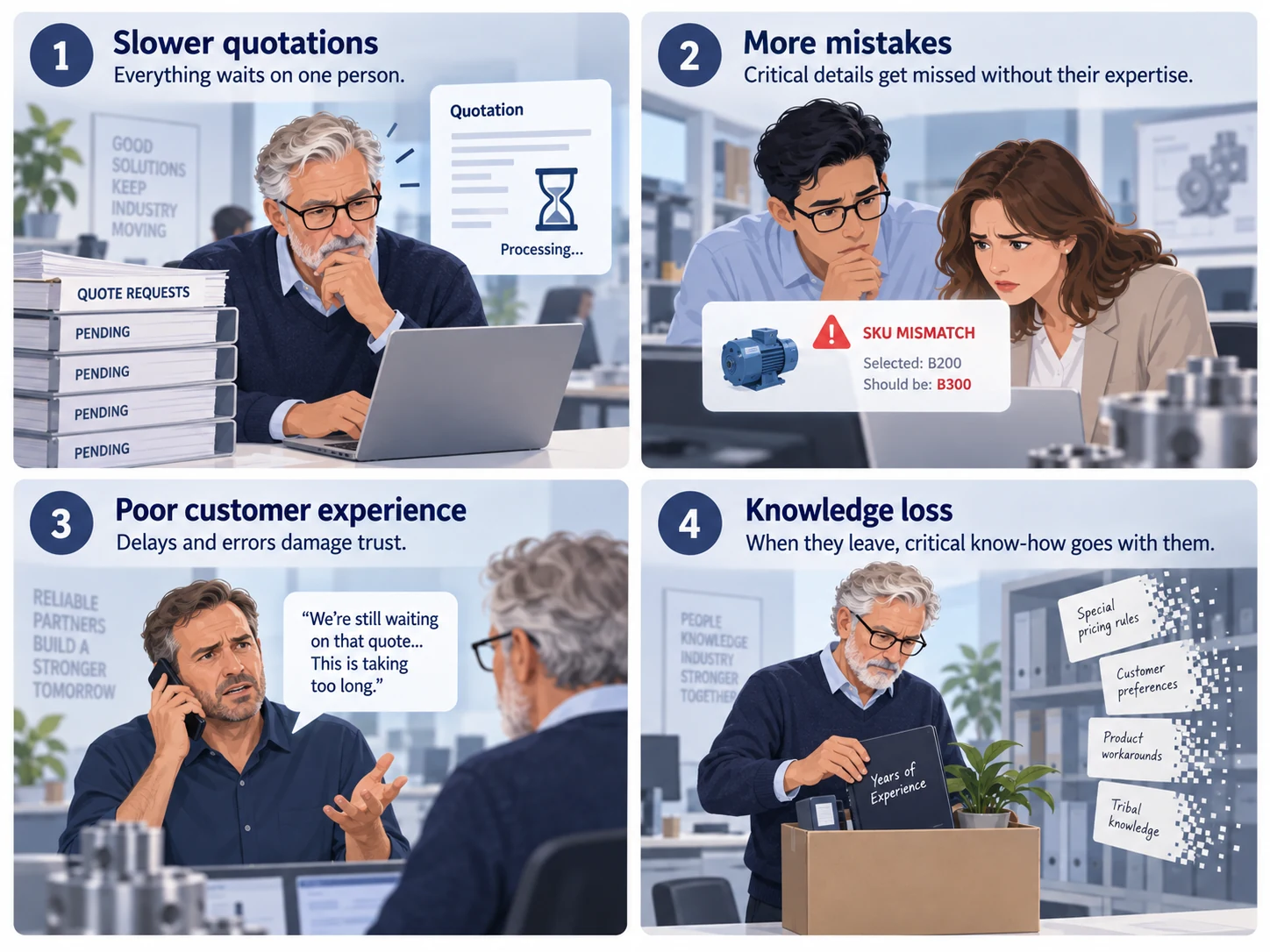
Slower quotations
The team spends more time searching, confirming and asking questions.
More mistakes
Product selection, specifications, pricing or customer requirements may be missed.
Poor customer experience
Long-term customers suddenly have to explain requirements your company previously understood.
Difficult employee onboarding
New employees take much longer to become productive because knowledge is transferred informally.
Knowledge loss
Years of small decisions, customer preferences and product understanding can disappear with one resignation.
You can recruit a replacement employee.
You cannot instantly replace ten years of accumulated experience.
Find the knowledge your business cannot afford to lose
You do not need to document every conversation or every decision.
Start with the knowledge that directly affects customers, quotations and revenue.
Product knowledge
Identify product substitutions, common combinations, naming variations and specification rules known mainly by senior staff.
Customer knowledge
Record customer-specific preferences, commonly ordered products, special requirements and historical exceptions.
Quotation knowledge
Make previous quotations, product selections and pricing decisions easy for the wider team to access.
Repeated questions
Look at what junior employees ask senior employees again and again.
Those questions are often the clearest indication of knowledge that should be captured centrally.
A simple exercise for business owners
Pick your three most experienced employees.
For each one, ask:
What decisions does this person make that the rest of the team would struggle to make without them?
Then group those answers into:
- product knowledge
- customer knowledge
- pricing knowledge
- supplier knowledge
- operational knowledge
You will quickly see where your biggest dependencies exist.
That is the knowledge you should start protecting first.
Experience should strengthen the business — not become a single point of failure
Your experienced employees should remain valuable.
But their knowledge should gradually become valuable to everyone around them too.
The goal is not to replace experience with software or documentation.
The goal is to capture important knowledge so that when your best people are unavailable, the business can still respond with the same speed, accuracy and confidence.
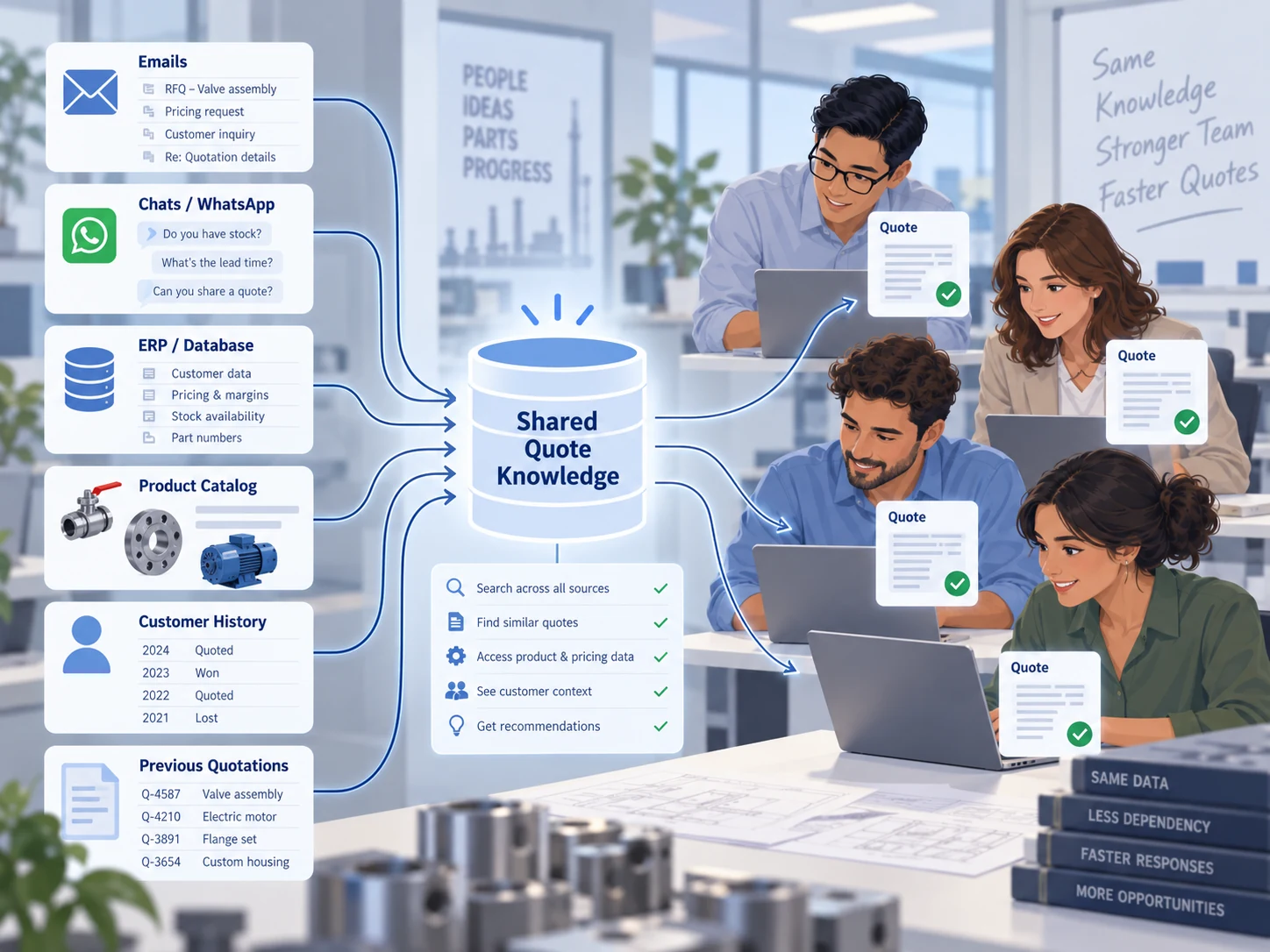
This is also where systems like STIMA can remove a large part of the dependency from quotation work. By bringing together product data, past quotations, customer context and matching logic, the team no longer has to rely on one experienced person every time an RFQ arrives.
It does not replace the knowledge of your best people. It helps turn that knowledge into something the wider team can actually use.